Most of us spend a large part of life working towards something: a better job, more money, a holiday, improved relationships, losing weight or feeling healthier. We reach one goal, enjoy the moment and then begin looking for the next. When we strip those ambitions back, many of us are trying to reach the same destination. We want to be happy.
What are we actually trying to achieve
Goals give us direction, but they can also encourage us to place happiness permanently in the future. We tell ourselves we will feel better when work is calmer, when we have more money, when we look different or when somebody else behaves as we hoped.
External circumstances matter. People can hurt us, work can become stressful and life is almost guaranteed not to be fair. The question is not whether those events affect us. It is how much of our happiness we place entirely in their hands.
If another person or a future achievement is solely responsible for making us happy, we also give that person or achievement the power to take happiness away.
Is happiness really a choice
I have always enjoyed books that challenge the way I think. That has taken me from spirituality and self-help to psychology, neuroscience, physiology and stories of extraordinary human achievement.
Some ideas are supported by strong science; others are philosophical or speculative. I do not agree with everything I read. What interests me is questioning the ideas and noticing where different perspectives connect.
One message appears repeatedly: happiness is a choice. I like the idea because it means we are not entirely at the mercy of circumstances. But if happiness were a simple decision, none of us would remain unhappy for long. Clearly, there is more to it.
What happens and how we respond
Someone says something that annoys you. A plan changes or something goes wrong. Was it only the event that created the frustration, or did your interpretation of it also play a part?
Two people can experience the same situation and respond very differently. Expectations, beliefs, previous experience and our emotional state influence what the event means to us. We do not experience the world entirely as it is; we experience it through the state we are in.
Recognising that is not the same as blaming ourselves for every negative emotion or pretending that difficult circumstances do not matter. It means accepting that our response forms part of the experience and may be something we can influence.
Control the controllable
We spend an extraordinary amount of time worrying about what other people think, what might happen tomorrow, things that have already happened and situations we cannot change. Worry does not necessarily improve the outcome. It can simply make the journey towards it more difficult.
Some problems deserve concern and action. A useful distinction is whether there is something practical we can do. If there is, do it. If there is not, our energy may be more useful somewhere else.
We cannot control everything life throws at us. We can influence how prepared we are to deal with it: how we sleep, eat and move; the people we spend time with; where we direct our attention; and whether we ask for support when we need it.
Make happiness more accessible
None of these choices guarantees happiness, and nobody should expect to feel happy all the time. They can, however, improve our ability to respond when life becomes difficult.
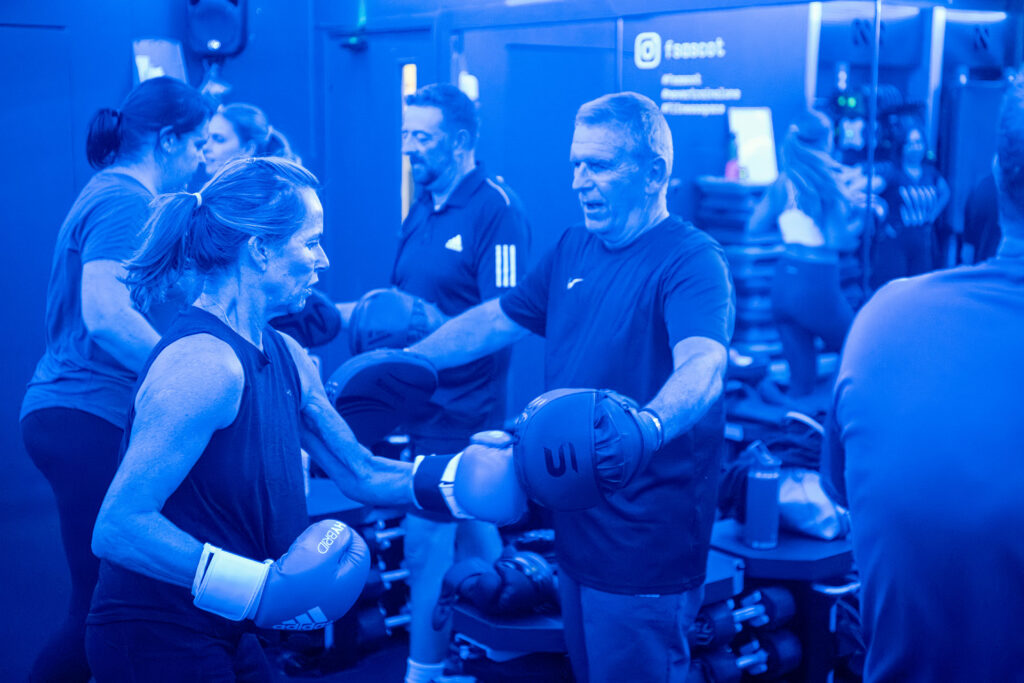
Regular movement is one practical place to begin. The right environment matters, especially if confidence or uncertainty has stopped you before. At Fitness Space Ascot, members can use the gym, join classes and ask for coaching rather than having to work everything out alone.
Sleep and nutrition also influence the state in which we meet the day. Our existing guide to fitness, health and sleep explains how exercise, recovery and daily habits connect, while our personalised nutrition guidance can help replace guesswork with a plan suited to the individual.
Take responsibility for what happens next
Perhaps happiness is not something we finally stumble upon when everything falls into place. Perhaps we make it more accessible through the choices we make each day.
We might not be responsible for everything that happens to us, but we can take responsibility for what we do next. Sometimes that means changing our thinking. Sometimes it means changing the physical state from which we are trying to think.
If improving your health would make everyday life feel more manageable, book a tour of Fitness Space Ascot. The team can show you the available training, class and coaching options and help you choose a realistic starting point.